
The Glorious Food Glossary
The Glorious Food Glossary tells you everything important about the world of food. The Food Glosssary is all about different kinds of food from all over the world and how they are prepared and what their main ingredients are.
Moreover, the glossary is all about what people all over the world are eating and drinking and their activities, festivities, marriages, etc that involves food.
This Food Glossary is all about food . . . glorious food. We tell you about the food, some stories about them and we try our best to make photos of them as we travel around the world. As of now, we are featuring extensively foods from Germany, the Philippines and the State of Kerala, India, but we will add more pictures for you to enjoy as we discover the food of the world... as we travel around the globe.
All articles are available through the search function or via the A to Z line at the top of every page.
Meen Porichathu / Fish Fry
Meen Porichathu also commonly called as Fish Fry is one of the popular dishes from Kerala, India which is simply fried fish which is made special by coating or marinating the cleaned fresh pieces of fish in Masala powder , then deep fry in coconut oil until they are crispy.
Coconut oil which is the favored oil for cooking by the Malayalees is the secret of delicious dishes in Kerala, India.
Please enjoy the pictures of Fish Fry made in Allepey, Kerala, India.
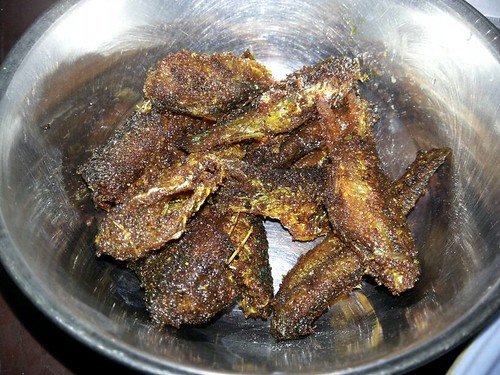
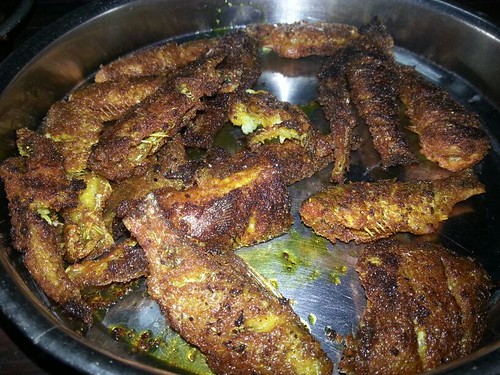
Picture below is called Choora Porichatu. Choora Porichathu is the Malayalam term for Tuna Fish Fry
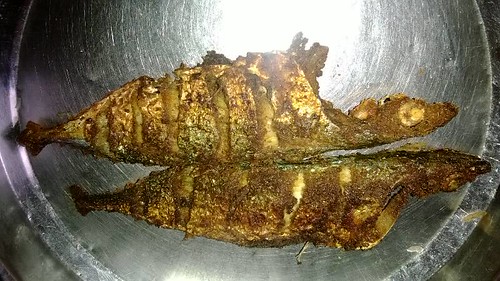
Coating the cleaned whole piece of Tuna with Masala powder first for some time before frying in Coconut oil gives the Keralite Fish Fry its distinct tasty flavor.
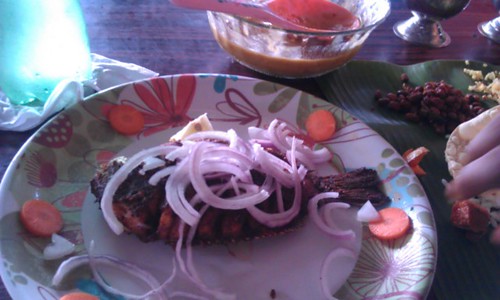
Below is one of the special Fish Fry "fit for a Prince". A Karimeen Fry made from fried Pearl Spot. This is a delicious meal of Karimeen Fry served with salad of raw sweet red onions on top. Prince Charles of England ate what I have eaten in Kerala, India after a wonderful and quiet boat tour of the Backwater of Allepey.
Karimeen (Pearl spot fish) fry is a sought after delicacy in Kerala. The Pearl Spot fish is marinated in a mixture of lemon juice, red chillies, and other spices and Masala Powder, too and and deep fried until crisp and golden brown. This is an exotic dish of Karimeen fry cooked Kerala style. The Karimeen fry is a spicy fried fish coated with the delicious and spicy Masala.
Karimeen is the state fish of Kerala and is one of the most important fish species in this state of India
American Barbecue
Deutsch: Amerikanisches Barbecue / Español: Barbacoa estadounidense / Português: Churrasco americano / Français: Barbecue américain / Italiano: Barbecue americano
American Barbecue is a culinary tradition deeply rooted in the cultural and regional history of the United States, characterized by the slow-cooking of meat over indirect heat, often using wood smoke for flavor. Unlike grilling, which involves high heat and quick cooking, American Barbecue prioritizes low temperatures and extended cooking times to achieve tenderness and a distinct smoky profile. This method has evolved into a diverse practice with regional variations, each defined by specific techniques, cuts of meat, and sauces.
Street Food
Deutsch: Straßenessen / Español: Comida callejera / Português: Comida de rua / Français: Nourriture de rue / Italiano: Cibo da strada
Street Food refers to ready-to-eat meals, snacks, or beverages sold by vendors in public spaces, typically from mobile stalls, carts, or temporary setups. It is a global culinary phenomenon that combines affordability, convenience, and cultural authenticity, often reflecting local traditions, ingredients, and culinary techniques. While definitions vary, street food is universally characterized by its accessibility, informality, and direct interaction between vendors and consumers.
Home Cooking
Deutsch: Haushaltsküche / Español: Cocina casera / Português: Culinária doméstica / Français: Cuisine maison / Italiano: Cucina casera
Home Cooking refers to the preparation and consumption of meals within a domestic setting, typically by non-professional cooks. It encompasses a broad spectrum of culinary practices, ranging from simple daily meals to elaborate dishes prepared for special occasions. Unlike commercial or industrial food production, home cooking prioritizes personal taste preferences, cultural traditions, and nutritional needs tailored to individual households.
Sea Cukes
Sea Cukes is another name for Sea Cucumbers which is a staple in peoples' diets, mainly in soups, stews and stir-fries, and demand for this homely undersea animal — cucumber is a misnomer, they're really echinoderms — is high.